
A Chase chargeback based purely on a phone agent’s verbal misrepresentation is a structurally weak case. The signed terms and conditions govern the transaction and a verbal promise from a support representative does not override them. The dispute becomes winnable only when the misrepresentation is documented in writing, the financial loss is direct and traceable to that misrepresentation and the case is filed under the correct reason code. Without written evidence, the probability of recovery approaches zero.
The core friction point in any merchant dispute is contractual hierarchy. When a long term Airbnb stay is booked, the cancellation policy is disclosed and agreed to at checkout. That signed agreement is the controlling document. A phone agent who states different terms creates a verbal modification with no contractual standing. In a chargeback adjudication, the merchant submits the original booking agreement and demonstrates the policy was applied correctly. A standard long term cancellation charge in some documented cases is seen with figures like $1,414.91 for a forfeited month and this is enforceable because it matches the disclosed policy. The reality is support agents are frequently wrong and issuers know this. A verbal guarantee alone is not evidence, that’s one party’s account against a signed contract.
What’s the Most Powerful Factor a Person can Have in Such Cases
The dispute’s results depend entirely on what exists in writing.
These three documented elements convert a losing case into a contestable one
- A written admission of the agent’s error – a senior case manager acknowledging “miscommunication” in chat or email.
- Written confirmation that the cardholder was instructed to vacate the property.
- A documented refund offer, however small. A “goodwill gesture” of $300 against a $1,414.91 charge is itself evidence that the merchant recognizes a service failure.
The weakness in written admissions is interpretive ambiguity. “Miscommunication” can mean the agent erred or the customer misunderstood. Customer service templates often mirror the complaint back: “I’m sorry for what you say you experienced” & this phrasing is pure sympathy, not admission. The arbiter reads the literal text, to which he/she is trained to, not the implied meaning. The strongest possible evidence is a voice recording of the original call. A recording of the agent explicitly guaranteeing no July charge and instructing immediate vacancy eliminates ambiguity entirely. If thats not possible in your case then written chat trail must carry the full evidentiary load.
How Outcome is determined
Misrepresentation is the weakest available framing. This approach forces you to prove that the merchant made a false statement that directly induced the transaction, a virtually impossible bar to clear once the merchant takes out signed checkout agreement. Instead of arguing about what was said, argue about what happened. Here 2 structurally superior angles exist:
- Cancelled Services – The cardholder cancelled the booking and vacated. Airbnb has confirmed in writing that property access is revoked. Paying $1,414.91 for a month at a property the cardholder is explicitly locked out of is a direct billing for services not rendered. Under this framing, the merchant must prove the cancellation policy was properly disclosed at booking.
- Services Not Provided – Functionally similar. The charge covers a period during which no service is available to the cardholder.
The “Cancelled Services” angle shifts the evidentiary burden onto Airbnb to document proper disclosure. That is a materially better position than arguing the cardholder was verbally misled.
Correct way of Filing Dispute for Maximum Recovery
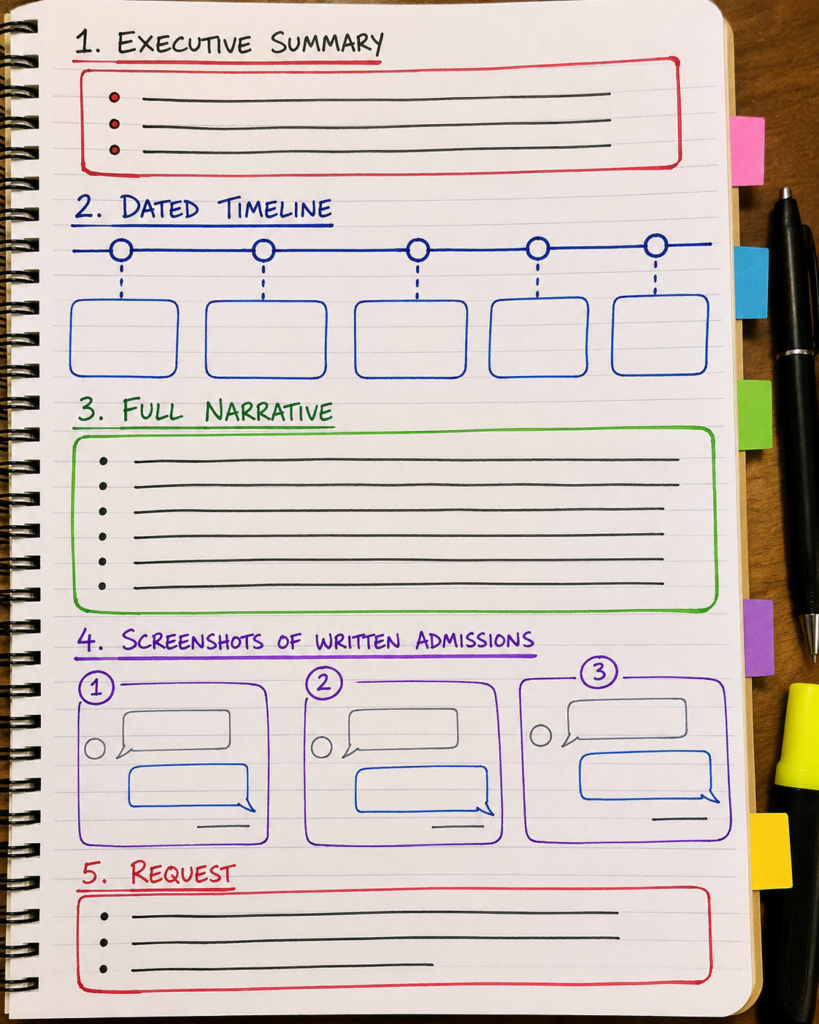
A chargeback is decided by an arbiter who reviews paper. The case must require zero legwork from them that’s why disorganized submissions lose the case, so build a single self contained PDF containing all these to win the case in your favour –
- An executive summary at the top
- 3 sentences stating the charge
- The cause and the requested reversal of the full $1,414.91.
- A dated timeline containing call date, cancellation date, vacate date, auto charge date, escalation date.
- The full narrative in plain sequence
- Screenshots of every written admission
- The vacate instruction
- The refund offer.
Submit online or wherever available or by fax to create a redundant record. Recovery probability also increases with cleaner packages.
Important note: rejecting the $300 goodwill offer preserves the full $1,414.91 claim. Accepting a partial settlement typically forecloses a chargeback for the same charge.
File the dispute under “Cancelled Services,” not “Misrepresentation.” Lead with the written lockout confirmation — the merchant admitting in writing that property access was revoked while still billing for the month. That single fact forces Airbnb to justify charging for an unavailable service, which is a harder defense than rebutting a verbal promise claim. Assemble the entire case into one PDF with an executive summary, a clean timeline and every written admission as labeled exhibits. Reject any partial goodwill offer until the chargeback resolves. If a call recording exists, it is the decisive asset, so submit it. The broader audit takeaway is preventative. Verbal terms from any merchant agent carry no contractual weight. When an agent’s instructions contradict the signed policy, the only protection is written confirmation or a recorded call before acting. The cardholders who win these disputes are the ones who documented the misrepresentation in real time, not the ones who relied on a guarantee that existed only on a phone line.