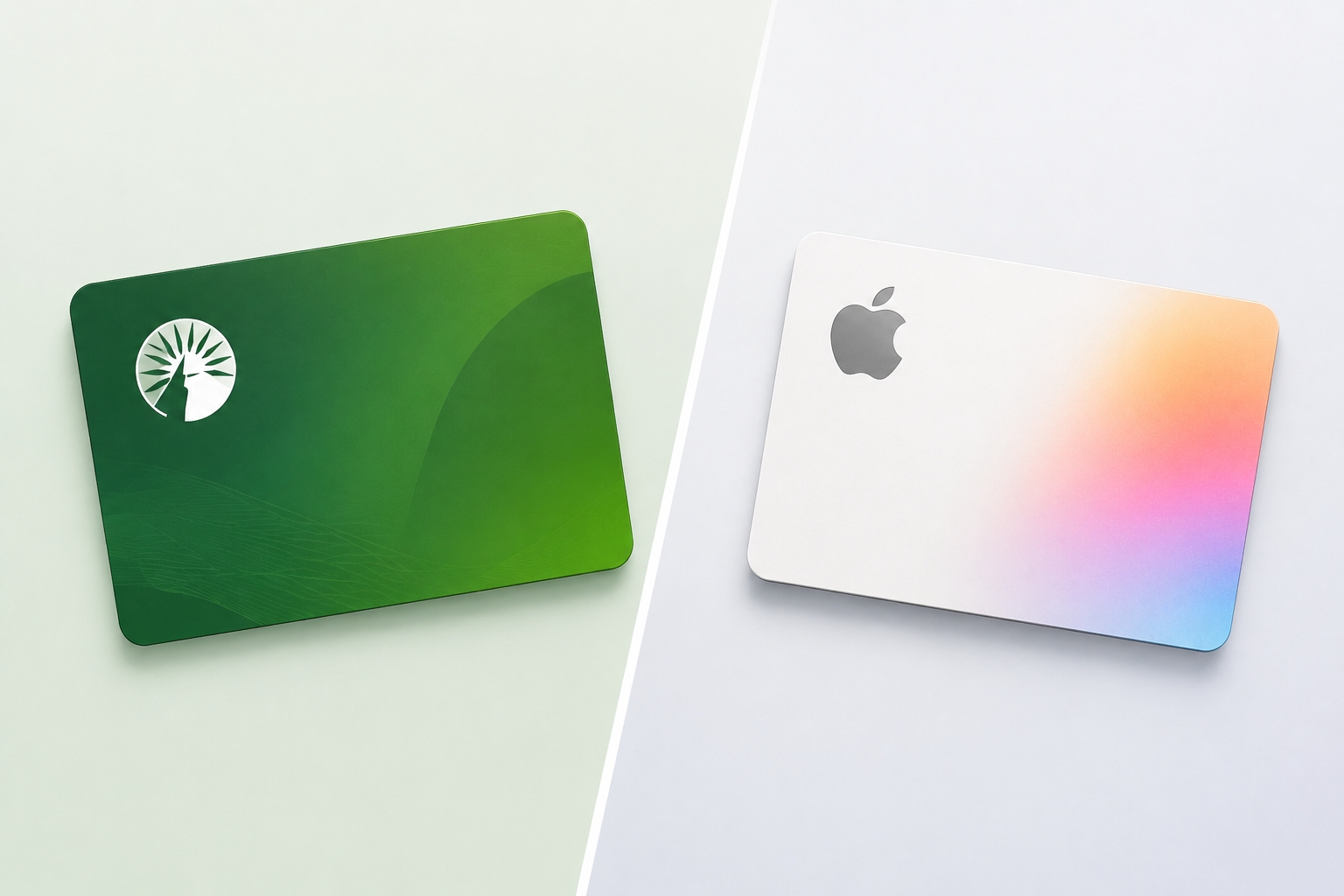
For a minimalist who pays in full, skip the reward games and already uses the Fidelity ecosystem, the Fidelity Rewards Visa Signature is the stronger everyday card. It earns a flat 2% cashback on every purchase & rewards are deposited into the Fidelity account, compared to the Apple Card’s 1% on most purchases made with the physical titanium card.
That does not make the Apple Card a bad choice either. Each card excels in its own style. The Apple Card offers one of the most polished user experiences in consumer finance & Fidelity Rewards Visa delivers the higher long-term return on everyday spending.
For a general purpose spend card, yield outperform aesthetics. One common reason users consider switching is, when they begin moving away from Apple’s ecosystem. As Apple Card delivers its best experience on an iPhone through Apple Wallet, while the Fidelity Rewards Visa works the same regardless of platform. For users replacing Apple devices over time or simply wanting a card that is independent of any ecosystem, Fidelity becomes a more natural long term choice.
How Spending Habits Kill Return
The Apple Card earns 3% at select merchants, 2% on Apple Pay transactions and 1% on any physical card swipe. Most real-world spend that isn’t tapped through Apple Pay lands at that 1% floor. The Fidelity Visa pays a flat 2% on everything with no category tracking and no wallet requirement — as long as you route the cash into an eligible Fidelity account like a brokerage, retirement or HSA account (Note: redemptions for traditional statement credits or gift cards gives a lower rate).
At aorund $30,000 in annual spending, the percentage difference gets important. At 1%, you earn $300. At 2%, you earn $600, the return is double. Even after factoring in the Apple Card’s occasional 2% and 3% earning tiers, its rewards structure is designed in such a way that its 1% on physical purchases lowers the overall return, especially for ones who like to swipe the card everywhere.
By comparison, the Fidelity Rewards Visa maintains a consistent 2% base floor on every purchase. For someone who doesn’t want to think about which payment method to use each time they check out, the consistent dependency on this card will help to maximize rewards with no extra effort.
While the Apple Card offers 3% at select merchant partners (such as Uber, Walgreens, Exxon and Nike), this rate only applies when paying via Apple Pay. Physical swipes at these same stores still drop to 1%. More importantly, chasing 3% merchant categories creates a “spending distortion” if you alter your natural habits (like driving out of your way to an Exxon) just to capture an extra 1%. The Fidelity card eliminates the need to focus your spending around merchant partnerships.
Simplicity is one of the biggest strength of Fidelity. Longtime cardholders often describe it as a “set it and forget it” card because every purchase earns the same rate, rewards can be redeemed automatically into an eligible Fidelity account and most importantly there is no need to remember categories or decide which card to take out of the wallet during checkouts.
Fidelity vs Apple
A longtime concern among users switching from Apple to other services is interface quality. Apple Card’s UI is widely regarded as best in class. The Fidelity experience, serviced by Elan Financial feels more traditional and utilitarian. With that said, the gap is largely one of presentation rather than functionality.
Functionality wise, Fidelity goes toe to toe with Apple while providing modern features such as automatic transaction categorization, historical spending insights and budgeting tools. The card appears right on the Fidelity dashboard. Paying the balance takes roughly a few clicks on either the website or the mobile app, meaning there is no meaningful friction in the payoff flow. So, Apple’s upper hand, we earlier talking about is purely cosmetic not operational. A minimalist who wants to log in, click “pay balance” and move on loses nothing other than eye catching visual.
Cash back mechanics: instant availability versus monthly deposit
Redemptions differs in timing and destination. The Fidelity Visa automatically deposits your cash back into your linked account once per month after the statement posts. Fidelity completely removed its old $25 (2,500 point) minimum redemption threshold, meaning every single cent earned gets transferred automatically each month to be invested immediately.
Skeptics often argue that brokerage funding isn’t a unique card feature because “money is fungible” you can manually transfer Apple Cash to a brokerage account through your bank. But when making a comparison to a card which do its job on behalf of a human then manual friction matters. Moving Apple Cash requires multiple steps (Wallet – Bank Account – Brokerage transfer) that often result in cash sitting uninvested, if not brought to knowledge. Fidelity’s automated monthly sweep bypasses human inertia entirely and put every dollar to work without a single thought on this matter.
By comparison, the Robinhood Gold Card pays 3% and moves rewards to a brokerage account the moment a purchase clears meaning no waiting for the statement. That 3% versus 2% spread is a 50% increase in earning rate. For a high-optimization user, it is looks compelling but carries a foreign transaction fee for new cardholders and requires an annual Robinhood Gold subscription [$50-$60/year, (variation because of monthly & yearly plan)].
Also, for anyone spending time abroad or unwilling to manage a subscription, the Fidelity card’s no-fee, no-FTF structure have an upper edge.
You would be even surpised to know that, when we surveyed the experience of multiple card holders, the users who once left Fidelity for Robinhood Gold shows the urge to switch back to Fidelity despite the lower rewards rate. And to be completely honest, we also agree with their thoughts to some extent. Sometimes earning slightly less is worth avoiding a subscription, remembering eligibility requirements and worrying about foreign transaction fees while traveling is something noone likes to get bothered about. Similary, Apple Card pays Daily Cash instantly to a digital wallet but caps most physical spend at 1% and its rewards do not natively flow into an investment account. When these such factors matter for someone then Fidelity comes out to be winner.
Benefits of Paying at the end of the Month rather than Daily Payoff
A common practice among disciplined spenders is paying the card to zero daily rather than monthly. Some people consider this as a simple budget routine that keeps spending under control rather than an attempt to optimize credit scores or utilization. Making multiple payments a month is generally harmless but doing this to bypass monthly assigned limit is a high risk behavior known as “Credit Cycling”
Credit cycling happens when a user with a low credit limit for example, $2,000 spends up to the limit, pays it off mid cycle and immediately spends another $2,000. Effectively forcing a $4,000 monthly velocity through a $2,000 line. Fraud and risk algorithm flag such behaviours because it circumvents the bank’s underwriting limits and can lead to sudden account closures.
In contrast, paying off a overall $5,000 monthly spend daily on a $50,000 limit cannot be counted as cycling at all. This is just an unusual payment habit that banks can tolerate, though it offers no functional benefit.
Pro Tip: Daily payoffs offer no yield advantage on a card whose rewards post monthly. Carrying the balance to the due date and paying once while your cash sits in a high yield savings account or an invested position is mathematically a superior play, even if it conflicts with a personal psychological habit.
Our Recommendation
If you already use or are willing to open a Fidelity account, apply for the Fidelity Rewards Visa Signature. It has no annual fee, no foreign transaction fee & a flat 2% return that doubles the Apple Card’s 1% floor on standard physical swipes. Its utilitarian interface is fully optimized for a quick, few click payoff routine and the automated monthly sweeps ensure rewards get put to work without manual effort.
Choosing the right card is just a part of the process which a person will execute either way with or without a good choice, long term impact on overall return changes with the way of usage. Firstly, if a 3% return matters more than simplicity and international travel is not a factor, Robinhood Gold Card is worth considering but remember that the higher rewards come at the cost of a required Robinhood Gold subscription. Second, drop the daily payoff habit. Pay once per statement on the due date, keep your total monthly spending well within your approved credit line to avoid risk flags and let your cash earn interest in the meantime. The result will be higher net yield with low extra efforts